Omotesando, which refers to the main
approach to Meiji-Jingu shrine, would be an intersection of Japan's religious tradition and
comtemporary culture.
Walking on the street might remind
you of
Champs-Elysees St. in Paris or
Unter den Linden St. in Verlin, but we are sure
that you'll find yourself in the Japanesque atmosphere when walking through the
approach.

Starting with
Ishidoro or a big stone lantern (but not used as
the light today), the approach has hundreds of Zelkova trees on the both
sides, leading us to our cultures now and then.


First you'll see the world first-class brand-name
shops such as
Gucci, Givancy, Celine, Louis Vuitton,
Burberry, Dior, and Chanel stand side by side along the street with
distinctive architectures, which would indicate elegance of the street.
Omotesando might surpass
Ginza, which has been the most famous in Japan, in gorgeousness.


New businesses such as
Apple and Nike join the exhibition with their simple and
modern displays.
Apple's shop adopts a glass-made front wall at
full size.

Needless to say, you'll find a cafe terrace
to spend a pleasant time with your partner, looking over the
street.

Going down the concave street, you'll see full of people on the sidewalks enjoy wandering with friends or family.

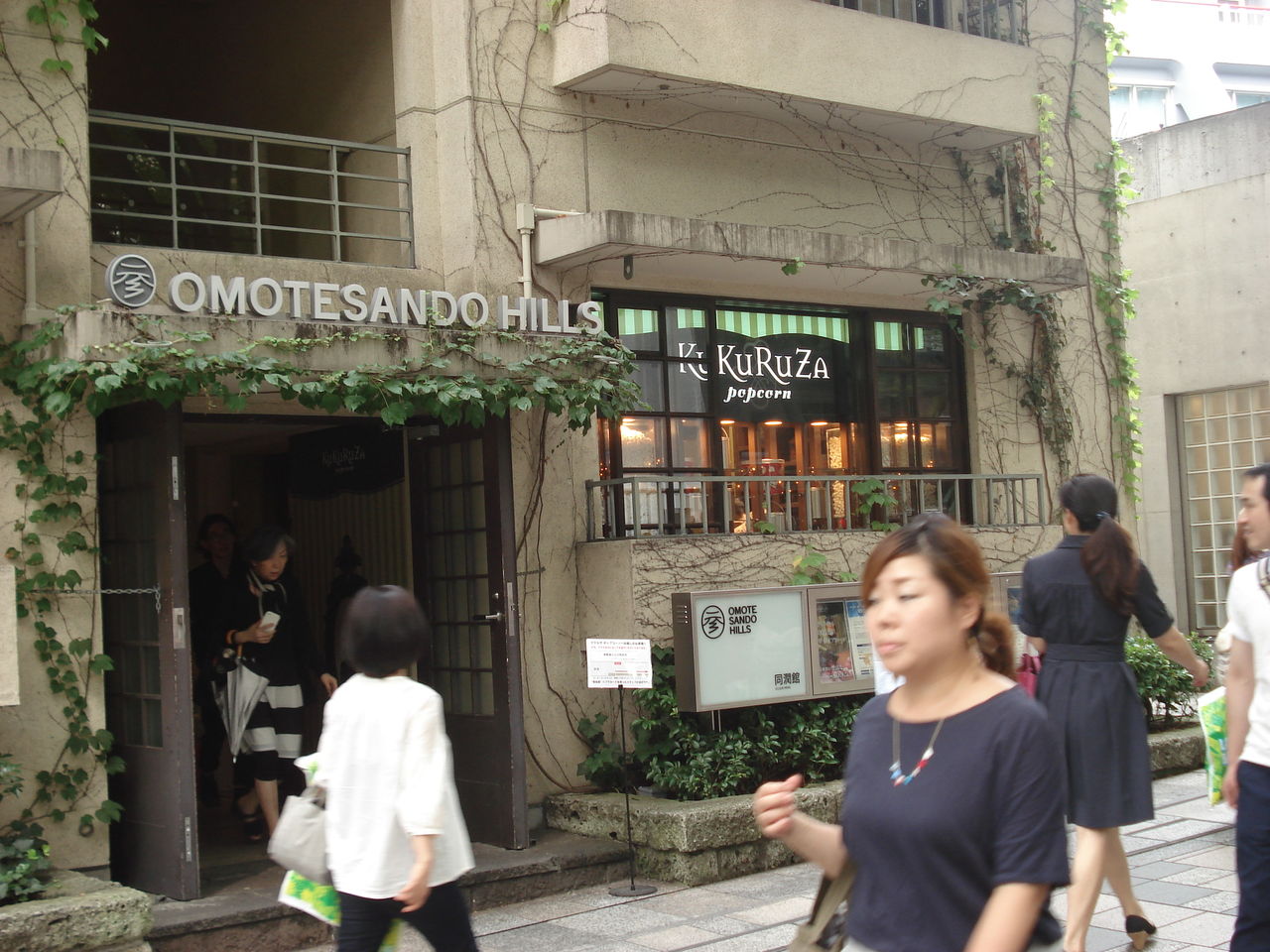
Nine out of ten, you'll come across a line of
young women and men who are waiting for something.
The line starts
at a popcorn shop,
KuKuRuZa, which originated in
Seatle in US and now gets more popular here in Tokyo.
(The board says "the
tail of line.")


Here is
Omotesando Hills, a modern building uniquely designed insides, where corridors are inclined as pallarel to the downhill street outside. About 100 fashionable
shops are open.
The 12-storied architecture has six floors on the
ground due to the height restriction, which means 6-storied under the ground.

On the opposite side,
KIDDY
LAND, a shop of small toys and goods with cute characters such as
Sanrio's Kitty and Desney's, stands with bright sign, swallowing young
girls and boys.
 Oriental Bazaar
, a
souvenior shop providing with Kimono, pottery, and Ukiyoe at reasonable
prices, shows up in a traditional architecture with red pillars and
green roofs.
 Heiroku Sushi
,
an inexpensive sushi bar where plates of sushi rest on a circular conveyer
belt, serves a wide variety of sushi including California roll, avocado roll and
so on.

Colorful commerical displays appear when you cross an
intersection where the road changes from downhill to uphill.
The
advertisements might overwhelm you in size and height.
 H&M
H&M, a Swedish apparel
company, soars before you,
too.

On the right, at the halfway point of the uphill,
you'll find a musium of Ukiyoe, called
Ukiyo-e Ota
Memorial Museum of Art, which possesses a large collection of
valuable woodblock prints (about 14,000).
Ukiyoe enthusiasts will find
numerous masterpieces during the Edo Period (the 17th -19th centuries)
.

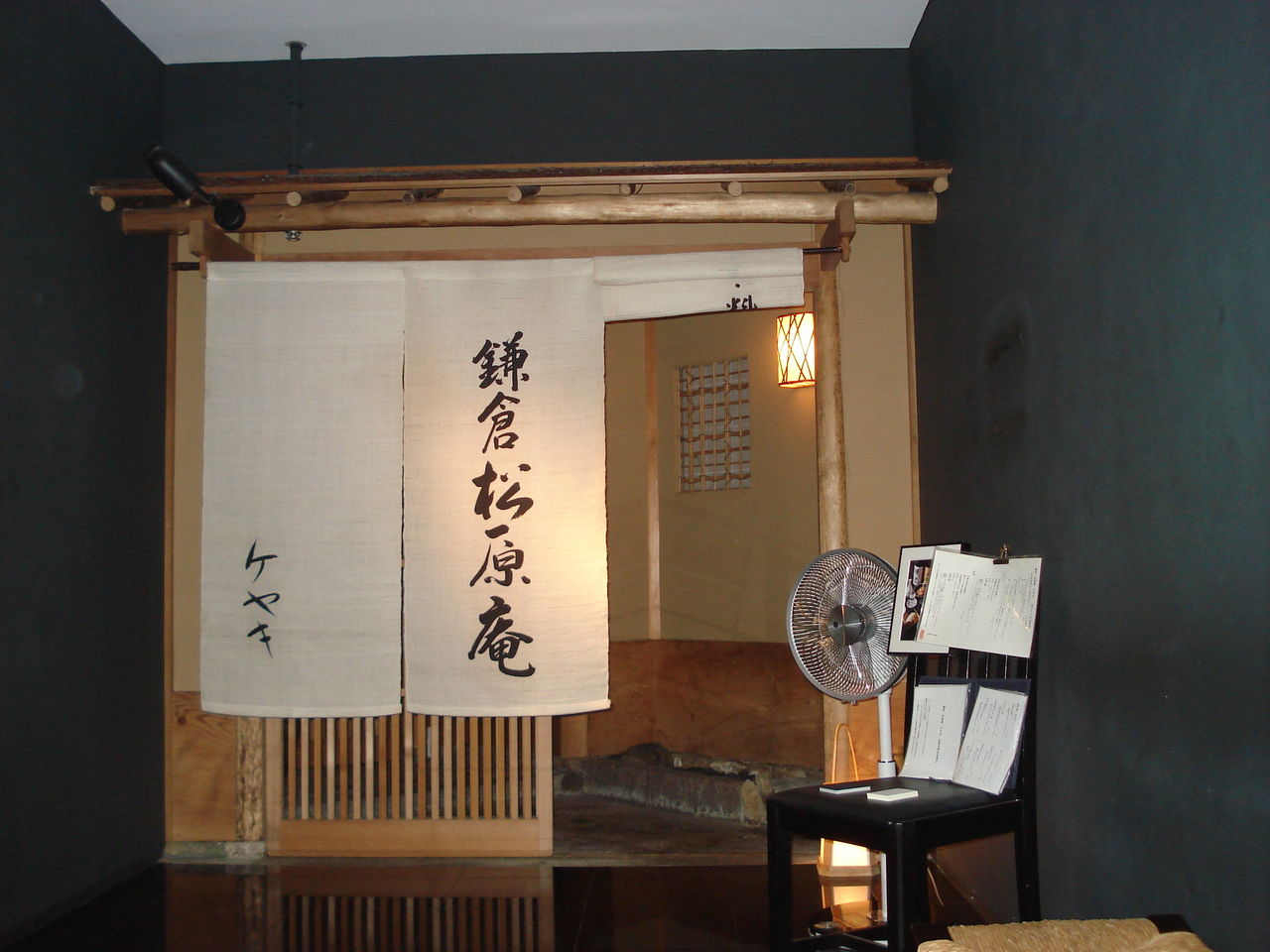
Going up for a while, if you don't miss a small shop sign,
Matsubara-an Keyaki, you'll have a chance to
know one of Japan's noodle cultures,
Soba
noodle.
The buckwheet noodle is commonly taken for lunch, served with
various toppings such as
tempura or deep flied dish of fresh vegetables and fish.
The entrance of restaurant is on the 4th floor of a modern
building, where you'll see
Noren or a traditional short
curtain with the shop name on it, hanging from the eaves.

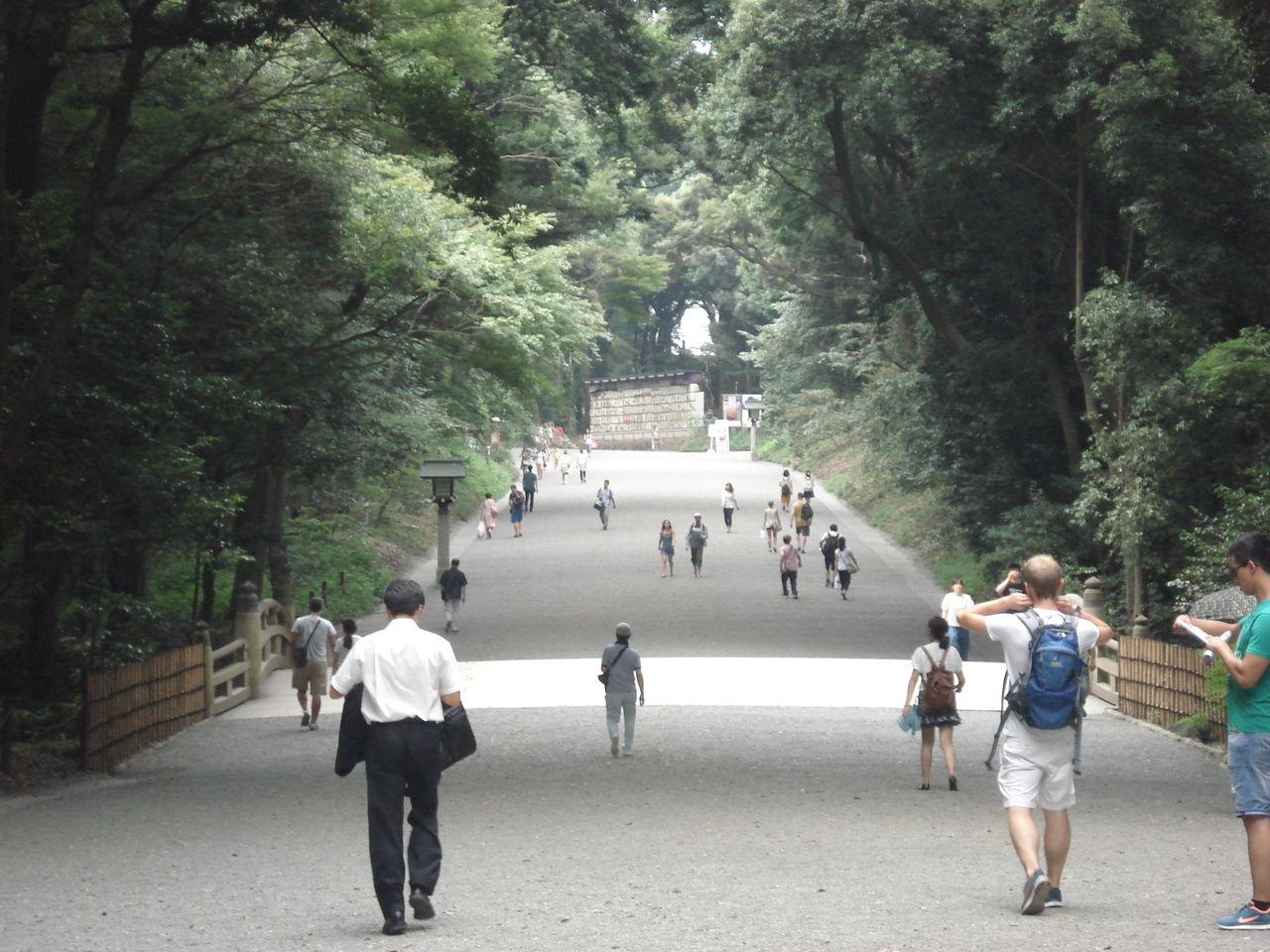
At last, a few minutes walk takes you to
the top of
Omotesando,
where the Zelkova street faces a deep forest.
Crossing
the pedestrian walk,
you see a huge
Torii
gateway on your right.

Unlike the triumphal arches in Paris and Verlin, the
wooden gateway is simple and natural, harmonized with nature.
It has a
role of clearly distinguishing the sacred area of shrine from the worldly area you've come
from.

Walking on a path paved with gravel, you are coming
closer to
Meiji-Jingu Shrine, which
enshrines Emperor
Meiji and
Empress Syoken.
The emperor ruled in 1868 -1912,
and achieved
Meiji Restoration which
drastically modernized the country from its fuedal system.

The Shinto architecture represents what we have
kept embrasing for centuries as a token of worship and appreciation to
ancestors and nature.